
Bond approval in a higher-rate market in one sentence
When interest rates are higher, the best way to improve your home loan approval chances is to show the bank a clean, complete and affordable application.

Why approval can feel stricter when rates rise
Banks assess affordability using the buyer’s actual financial position and the repayment linked to the loan amount. When the prime lending rate is higher, the repayment is higher too.
That means the bank may be more cautious, not because it does not want to lend, but because it needs to make sure the buyer can manage the bond responsibly.
The latest rate environment, with prime at 10.50%, makes preparation more important. A buyer with organised documents, controlled debt and stable income is in a stronger position than a buyer who applies without checking the basics first.
Start with your credit score
Your credit score gives banks an indication of how you manage debt. It is not the only factor, but it is important.
Late payments, high credit card balances, unpaid accounts or too many recent credit applications can weaken your profile. A clean record helps banks feel more confident that you will manage a home loan responsibly.
Bond Gallery has a guide on what credit score you need for a home loan. Buyers should review their credit profile early, not only after finding a property.
Reduce short-term debt where possible
Affordability is not only about income. Banks also look at what already leaves your account every month.
Car finance, personal loans, credit cards, store accounts and other debit orders can reduce the amount available for a bond repayment. Even if every account is paid on time, too much monthly debt can limit approval.
Before applying, look at whether any small debts can be settled or reduced. Do not take on new unnecessary credit shortly before a bond application. A cleaner debt profile can support a stronger affordability outcome.
Prepare documents before the bank asks
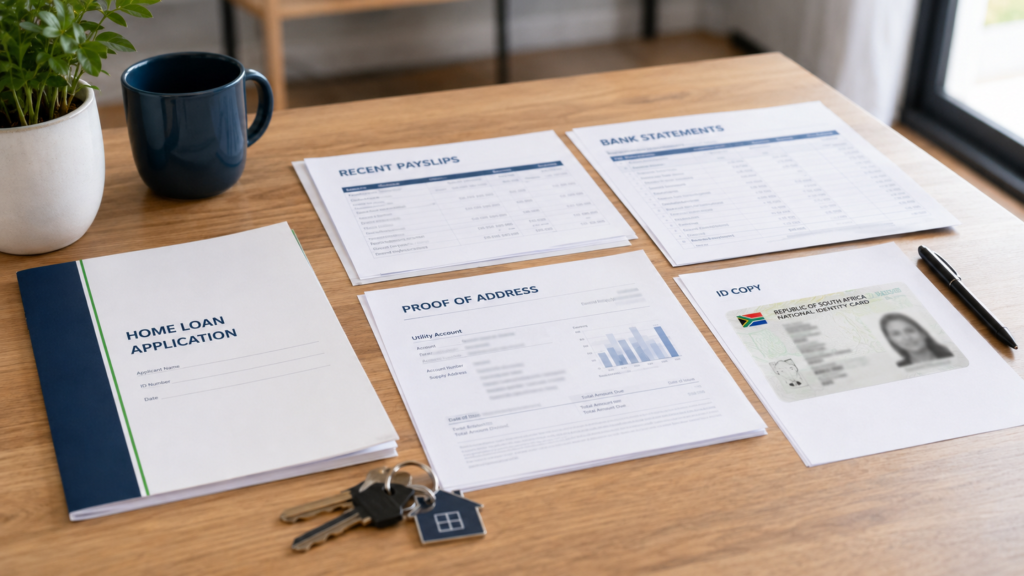
One of the easiest ways to avoid delays is to prepare your documents upfront. Banks usually need proof of identity, proof of income, bank statements, proof of address and supporting documents depending on your employment type.
Self-employed buyers may need more detailed documents, including financial statements, tax documents and business bank statements. Permanently employed buyers usually need recent payslips and bank statements that reflect salary deposits.
Bond Gallery’s home loan documents guide explains what buyers should prepare before applying. Getting this right from the start helps the application move more smoothly.
Check your bank statements carefully
Bank statements tell a story. Banks review them to understand income, spending habits, debit orders and financial behaviour.
Returned debit orders, unpaid items, gambling transactions, unexplained large transfers or irregular income can raise questions. That does not always mean the application will be declined, but it can slow the process or require further explanation.
In the months before applying, try to keep your accounts clean and predictable. Make sure salary payments are clear, avoid unnecessary overdraft use and keep supporting documents for any unusual transactions.
Save towards a deposit and costs
A deposit can strengthen an application, but buyers should also remember transfer costs, bond registration costs, moving costs and immediate homeownership expenses.
Some buyers focus only on the deposit and forget the additional costs of buying property. Others apply for the maximum possible bond without leaving enough cash for the first few months after transfer.
Use the Bond Gallery bond calculator and transfer cost tools to plan more realistically. A well-prepared buyer understands both the loan and the upfront costs.
Use pre-qualification before serious house hunting
Pre-qualification helps buyers understand their affordability before viewing homes. It can prevent wasted time and make offers more realistic.
It also helps estate agents and sellers see that you are serious. In a market where rates are higher and approvals can be more carefully assessed, this preparation can make a difference.
Pre-qualification is not the same as final bank approval, but it is a useful starting point. The final approval still depends on the property, bank assessment and full supporting documents.

Compare more than one bank
Different banks may assess the same buyer differently. One bank may offer a better rate, another may approve a higher amount, and another may have conditions that suit the buyer better.
This is why using a bond originator can be helpful. Applying through one channel can give access to multiple bank options and reduce the need to repeat the same admin several times.
Bond Gallery explains what a bond originator does and why this process can help buyers compare options.
Final word
Higher rates do not stop all approvals. They simply make preparation more important.
If you want to improve your chances, focus on what you can control: your credit behaviour, documents, debt levels, deposit, bank statements and affordability. A strong application gives the bank a clearer reason to say yes.
Need help with your home loan?
Bond Gallery can help you understand your affordability, prepare your application and compare offers from multiple banks. You can contact Bond Gallery or find a branch near you when you are ready to start the process.
FAQs
Can I get a home loan when interest rates are high?
Yes. Banks still approve home loans when rates are higher, provided the buyer meets affordability, credit and documentation requirements.
What weakens a home loan application?
High debt, poor credit behaviour, missing documents, unstable income and unaffordable repayments can weaken an application.
How many bank statements do I need?
Most banks request recent bank statements. Bond Gallery’s home loan documents guide explains the usual requirements in more detail.
Does a deposit guarantee approval?
No. A deposit can strengthen the application, but banks still assess affordability, credit profile and documentation.
Can Bond Gallery submit to multiple banks?
Yes. Bond Gallery can help structure your application and compare available offers from participating banks.
Financial Disclaimer
This article is for informational purposes only and does not constitute financial advice. Home loan approval, interest rates and loan terms are subject to bank assessment and approval. Please consult a qualified financial adviser for personalised guidance.